Nine people are dead in Los Angeles County jails since the start of 2026. Two months. Nine bodies. And the state agency California created specifically to investigate these deaths has not completed a single review.
That is not a typo. Not one.
The deaths come on the heels of a 2025 that saw 46 people die in LA County custody — a 44 percent spike from the 32 deaths recorded in 2024. If the current pace holds through 2026, the county is on track to exceed 50 in-custody deaths for the first time in recent memory. The numbers alone tell a story of institutional failure at every level: the Sheriff’s Department that runs the jails, the Board of Supervisors that funds them, and the state oversight apparatus that was supposed to keep them honest.
The Numbers Behind the Crisis
The trajectory is damning. In 2024, 32 people died in LA County jail facilities, primarily at the Twin Towers Correctional Facility and Men’s Central Jail — two aging, overcrowded lockups that have been targets of reform efforts for decades. By the end of 2025, that number had climbed to 46, a jump that outpaced population increases in the facilities and cannot be explained away by demographic shifts or seasonal variation.
Then came January and February 2026: nine more deaths in rapid succession.
The causes of death span a familiar and preventable range. Medical emergencies where staff response came too late. Suicides in cells that lacked adequate monitoring. Drug overdoses involving substances that should never have made it past intake screening. In at least two cases, families say their loved ones complained of medical symptoms for days before they were seen by a provider — and by then, it was too late.
These are not statistics. They are people. Sons, fathers, mothers, brothers. Many had not been convicted of any crime. They were in pretrial detention, held because they could not make bail, and they died waiting for their day in court.
A State Watchdog With No Teeth — and No Results
California established its jail oversight agency with a clear mandate: review in-custody deaths, identify systemic failures, and push for reforms that would prevent the next death. On paper, it was a direct response to years of advocacy from families, civil rights organizations, and jail reform groups who argued that local agencies could not be trusted to investigate themselves.
In practice, the agency has been a ghost. As of early March 2026, it has not completed a single death review. Not for the nine deaths this year. Not for the 46 from 2025. The backlog is growing, and with it, the sense among families and advocates that the oversight was performative from the start — a political gesture dressed up as accountability.
The reasons for the paralysis are bureaucratic and predictable. Staffing shortages. Jurisdictional confusion with the Sheriff’s Department, which controls access to facilities, records, and witnesses. A lack of subpoena power that leaves investigators dependent on the cooperation of the very agencies they are supposed to be scrutinizing. The result is an oversight body that exists in name only, producing reports at a pace that ensures no findings will arrive in time to save the next person.
“You cannot call it oversight if nobody is looking,” said one advocate who works with families of people who died in LA County custody. “They built a watchdog and forgot to give it eyes.”
Attorney General Bonta Takes Aim
Where the state oversight agency has stalled, California Attorney General Rob Bonta has moved forward with a lawsuit that pulls no punches. Filed against LA County, the suit alleges “inhumane conditions” inside the jail system, painting a picture of facilities that fail to meet even the most basic standards of human decency.
The complaint details conditions that would be unacceptable in any setting, let alone one where the government has assumed total control over people’s lives. Spoiled food served to inmates. Pest infestations — cockroaches and rodents — in housing units and food preparation areas. Inadequate medical and mental health care that leaves people suffering for days or weeks before receiving treatment, if they receive it at all.
The lawsuit also targets what Bonta describes as a culture of neglect within the Sheriff’s Department, which operates the jails. Deputies who ignore medical emergencies. Intake processes that fail to screen for suicide risk or substance dependency. A grievance system that functions as a dead letter, with complaints filed and never addressed.
The AG’s office is seeking court-ordered reforms, including mandatory staffing ratios for medical and mental health providers, independent monitoring of conditions, and a mechanism for enforcing compliance — something the current oversight structure conspicuously lacks.
For families of the dead, the lawsuit is a mixed bag. It validates what they have been saying for years. But it also underscores how long the system has known about these problems and chosen to do nothing.
Supervisor Hahn’s Accountability Plan
On the county side, LA County Supervisor Janice Hahn has introduced what she calls an accountability plan aimed at reducing deaths in custody. The plan includes enhanced medical screening at booking, increased funding for mental health services inside the jails, and a requirement that the Sheriff’s Department report publicly on every in-custody death within 30 days.
The plan also calls for the creation of an independent review panel — separate from the state agency — that would examine each death and issue recommendations within 90 days. Hahn has framed the proposal as a recognition that the county cannot wait for the state to act.
“We are burying people on a near-weekly basis,” Hahn said in a statement. “Every one of those deaths is a failure of the system we oversee, and we have to own that.”
Critics, however, point out that the Board of Supervisors has passed similar resolutions before, and the jails have continued to deteriorate. The board controls the budget that funds the Sheriff’s Department, and skeptics argue that without a willingness to tie funding to compliance, the latest plan is likely to meet the same fate as its predecessors — praised at press conferences, ignored in practice.
The Sheriff’s Department, for its part, has pushed back against what it characterizes as unfair scrutiny, arguing that many deaths are the result of pre-existing medical conditions or drug use that began before incarceration. Department officials have said they are cooperating with both the state investigation and the AG’s lawsuit, though family attorneys dispute that characterization.
What Families Face When Someone Dies in Custody
Behind the policy debates and legal filings, there are families trying to find out what happened to the people they love. And the system they encounter is designed, whether by intent or indifference, to keep them in the dark.
Notification often comes late and with minimal information. A phone call from the coroner’s office, hours or days after the death. A cause of death listed as “under investigation” for months. Requests for medical records and incident reports met with delays, redactions, and bureaucratic runarounds that can stretch for a year or more.
Families who pursue wrongful death claims face a county legal apparatus that treats delay as strategy. LA County has paid out hundreds of millions of dollars in jail-related settlements and judgments over the past decade, yet the deaths continue — suggesting that financial liability alone is not a sufficient deterrent.
For many families, the emotional toll is compounded by the stigma attached to incarceration. Their grief is treated as less legitimate because their loved one was in jail. The public narrative defaults to the assumption that people in custody somehow brought their deaths upon themselves — an assumption that crumbles under scrutiny when you look at the conditions they were held in and the care they were denied.
The Systemic Failures Driving the Deaths
No single factor explains why people keep dying in LA County jails. But several systemic issues converge to create conditions where death becomes predictable.
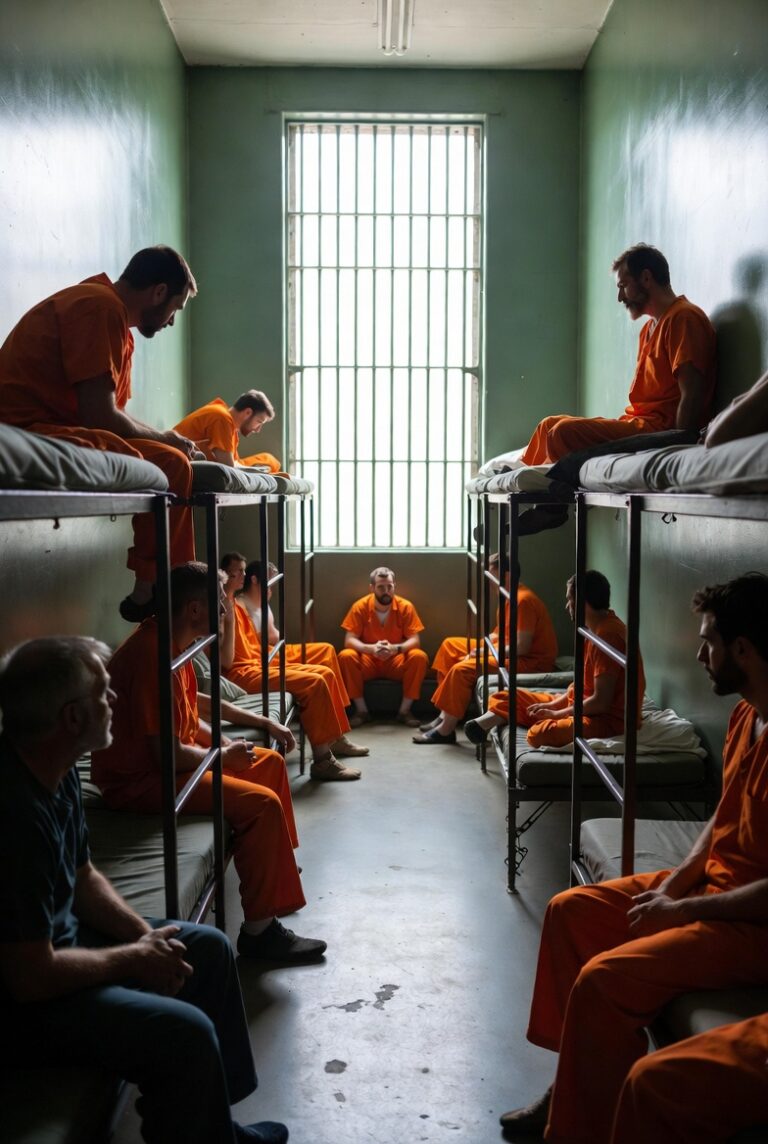
Overcrowding and understaffing. The jail system routinely operates above its designed capacity, while staffing — particularly for medical and mental health positions — has failed to keep pace. Deputies are stretched thin across housing units, reducing the frequency and quality of welfare checks. Medical providers carry caseloads that make individualized care impossible.
Crumbling infrastructure. Men’s Central Jail, the system’s largest facility, was built in 1963 and has been slated for replacement for over a decade. The physical plant is deteriorating, with ventilation, plumbing, and sanitation systems that fail regularly. The Board of Supervisors voted years ago to close the facility, but no replacement has been built, and the jail remains open and overcrowded.
Inadequate mental health care. An estimated 40 percent of the LA County jail population has a diagnosed mental illness. The jail system has become, by default, the largest mental health facility in the country — a role it is neither designed nor equipped to fill. People in acute psychiatric crisis are housed in general population or in units that lack the staffing and resources to manage their conditions safely.
A culture of impunity. Despite repeated investigations, lawsuits, and reform mandates, the Sheriff’s Department has faced few meaningful consequences for conditions inside the jails. Leadership turns over, reform plans are announced, and the underlying culture — one that treats incarcerated people as less than fully human — persists.
What Comes Next
The convergence of a rising death toll, a failed oversight agency, a state lawsuit, and a county accountability plan creates a moment of unusual pressure on the LA County jail system. Whether that pressure translates into actual change is an open question.
Attorney General Bonta’s lawsuit could result in court-ordered reforms with real enforcement mechanisms — the kind of federal consent decree that transformed other troubled jail systems, including in Cook County, Illinois, and Maricopa County, Arizona. But consent decrees take years to negotiate and implement, and compliance is often uneven.
Supervisor Hahn’s accountability plan could provide a faster path to transparency, but only if the Board of Supervisors is willing to use its budgetary authority to enforce compliance — something it has historically been reluctant to do when it means confronting the Sheriff’s Department.
The state oversight agency could still become the watchdog it was designed to be. But that would require staffing, funding, and political will that have been absent since its creation.
In the meantime, the count continues. Nine dead in two months. Forty-six last year. And a system that treats each death as an isolated incident rather than what the data makes clear it is: a pattern, predictable and preventable, that will not stop until someone with authority decides it must.
If someone you know has died in LA County custody, or if you have information about conditions inside the facilities, contact Jail411 through our tip line. Families seeking legal resources can visit our resource directory.