Nationwide phone guide
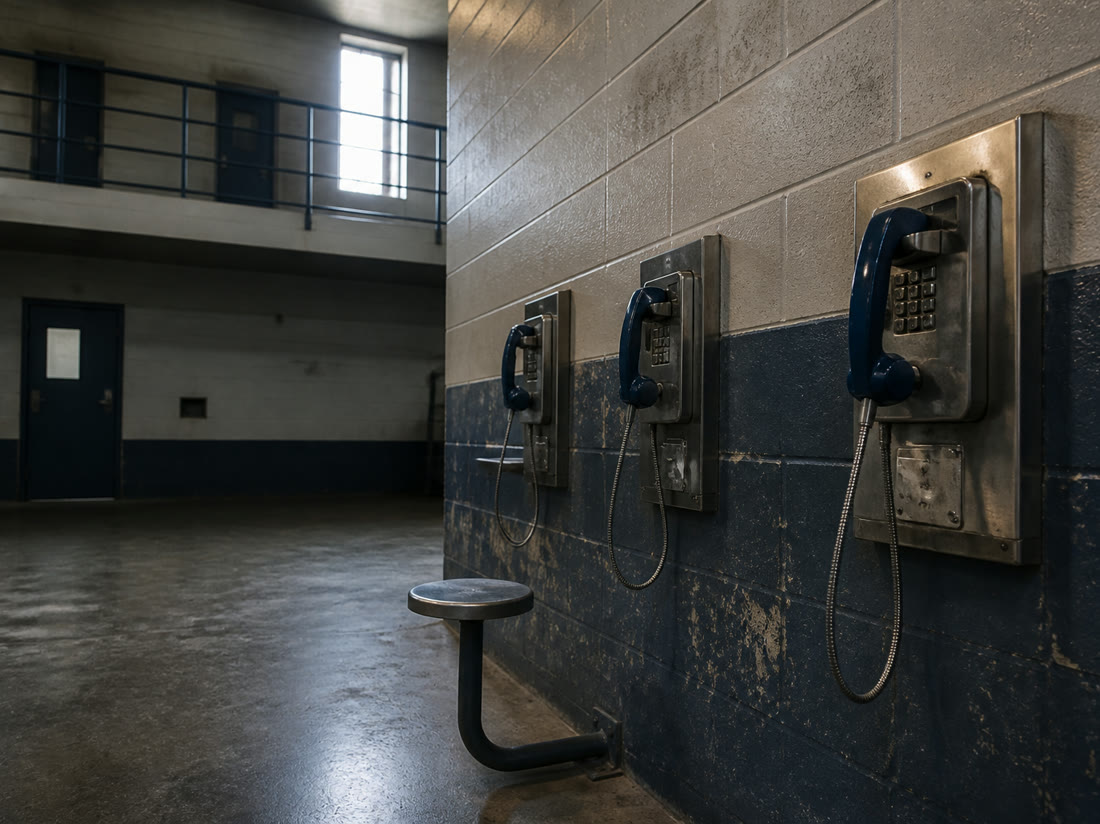
You usually cannot dial a housing unit directly. First confirm the exact facility, then use that facility's current calling instructions and provider.
Do not fund an account from a search ad. Open the facility or operating agency's official phone page first. Providers can change, even within the same state.
Have this ready
Four facts prevent most wrong accounts.
- 01Exact facility
Not just the county or state
- 02Person's ID
Booking, DOC, register, or A-number
- 03Your number
The phone that will receive calls
- 04Official provider
Named by the facility today
The short answer
Start with the facility, not the phone company.
In most jails and prisons, the incarcerated person places the outgoing call. Confirm the exact facility and open its official phone instructions before creating or funding anything. Common systems include Securus, ConnectNetwork or ViaPath, ICSolutions, NCIC, HomeWAV, and CIDNET. Each can use different account types: money tied to your receiving phone number is not the same as money placed in the incarcerated person's phone account.
Which system holds the person?
The operator decides where the rules live.
The custody system determines where the instructions live. Start with the system that operates the facility, then verify the individual location.
County or city jail
Check the sheriff, police, or county corrections website. One county can use a different provider, free-call policy, or approval process than the county next door.
State prison
Check the state department of corrections and the person's current institution. Statewide contracts can still change on a facility-by-facility schedule.
Federal prison
Use the Federal Bureau of Prisons location page and communications guidance. Contract facilities may not use every BOP-operated system.
ICE or contract detention
Use ICE's facility page and the detention center's operator instructions. Do not assume the county jail's normal provider applies to an ICE housing unit.
Common calling systems
Use the provider named by the facility.
These links go to major correctional calling platforms, but a familiar name is not proof that it serves the current facility. Start with the facility page, then choose the exact account type it names. Do not fund every provider while trying to find the right one.
AdvanceConnect · Securus Debit · Direct Bill
Securus
- What it provides
- AdvanceConnect is a prepaid account controlled by the person receiving calls. Securus Debit places funds with the incarcerated contact for eligible Securus services.
- Before adding funds
- Confirm the facility, select AdvanceConnect or Securus Debit intentionally, match the receiving number or contact, and save the transaction receipt.
ViaPath · GTL · AdvancePay · PIN Debit
ConnectNetwork
- What it provides
- AdvancePay is tied to the receiving phone number. PIN Debit funds the incarcerated person's calling balance. Trust Fund is a separate custody-money product.
- Before adding funds
- Check the facility listing for AdvancePay or PIN Debit, use the listed Site ID when required, and do not send a phone payment to Trust Fund.
Prepaid Account · Debit Telephone Account
ICSolutions
- What it provides
- A Prepaid Account is tied to one designated receiving number. A Debit Telephone Account belongs to the incarcerated person and can call permitted numbers.
- Before adding funds
- Choose who should control the balance, enter the exact facility and ID, review expiration or refund terms, and keep the purchase record.
Prepaid Collect · Inmate Phone Account
NCIC
- What it provides
- Friends and family can fund a phone account associated with their number. Some participating facilities also allow funding the incarcerated person's phone account.
- Before adding funds
- Search for the exact facility first. Select the receiving-number account or inmate phone account deliberately; not every location enables both.
Talk to Me funds · Inmate General Fund
HomeWAV
- What it provides
- Participating facilities may offer voice and video through one HomeWAV account. Talk to Me funds are used for communication with the funding user.
- Before adding funds
- Wait for account approval, connect to the correct person and facility, identify which balance you are funding, and remember that the incarcerated person initiates the call.
Voice · Video · Mail · data balance
CIDNET
- What it provides
- CIDNET sells data used for enabled voice, video, and mail services instead of a traditional minute-only phone balance.
- Before adding funds
- Confirm the facility offers Voice, verify your phone number, connect the correct contact, and understand that the incarcerated person initiates calls.
Your account record
Save this before the first call
- Exact facility, incarcerated person's name, and booking, DOC, register, or A-number
- Provider name and the account type you opened or funded
- Receiving phone number exactly as registered with the provider
- Amount added, fees, total charge, transaction number, date, and status
- Screenshot of the facility's current phone instructions and provider listing
- Provider support case number for any block, charge, disconnect, or refund request
When calls fail
Trace the call before adding more money
- Confirm the account is active, funded, and attached to the correct phone number or incarcerated person.
- Remember that the incarcerated person normally must initiate the call during allowed phone time.
- Turn off spam filtering, unknown-caller silence, call forwarding, and three-way calling before the next attempt.
- Write down the attempted call time, displayed number, recorded message, disconnect point, and amount charged.
- Ask the provider about account, billing, and connection errors; ask the facility about approval, schedule, housing, or lockdown restrictions.
- Do not open another account or add a second deposit until the first account and transaction have been traced.
Phone calls process
How to receive a call without guessing
Complete these steps in order. A transfer, provider change, or wrong identification number can make an otherwise valid account useless.
- 01
Confirm where the person is today
Use the responsible agency's locator or call the facility. Transfers can change the provider and reset contact approvals.
- 02
Open the facility's official phone instructions
Look for telephone, communications, inmate services, or family information on the agency's own website.
- 03
Record the provider and account type
Some systems require a recipient account, some deduct from the person's account, and some provide free calling. Follow the facility's wording.
- 04
Register the receiving phone number
Use the same number you expect to answer. Complete identity, billing, or contact approval steps only when the official instructions require them.
- 05
Add only the amount you intend to use
Check fees, refund terms, limits, and whether money belongs in a phone account or the person's trust account before paying.
- 06
Answer and follow the recorded prompt
Allow unknown calls, listen for the facility and person's name, and accept the call exactly as directed.
The call route
Three checkpoints. One connected call.
A problem at any checkpoint can stop the call. Start troubleshooting with the exact message you heard or saw.
-
01
Facility
Controls access, schedule, monitoring, and approved numbers
-
02
Calling system
Connects the call and may manage registration or payment
-
03
Your phone
Must accept the incoming number and recorded prompt
No nationwide vendor rule
What changes from one facility to another
The provider is selected by the agency or facility. Never choose one from memory or an advertisement.
The incarcerated person, the recipient, or the agency may pay. Some facilities provide free calls; others use prepaid or debit arrangements.
Some systems require an approved contact list, identity check, billing address, or verified phone number.
Housing assignment, facility routine, discipline, lockdowns, and demand can affect when and how long calls are available.
General calls are commonly monitored. Attorney-client communication follows separate facility procedures and should not be handled like an ordinary social call.
Current charges and refund rules come from the facility's active provider agreement. Review them before depositing money.
Troubleshooting
When the call does not come through
The phone never rings
Check spam blocking, unknown-caller silence, carrier filters, blocked numbers, and whether the facility requires your number to be approved.
The call disconnects immediately
Disable call forwarding or three-way calling and listen for the acceptance prompt. Then check the provider's device and carrier requirements.
The account cannot find the person
Confirm the current facility and enter the exact booking, DOC, register, or A-number required by that system.
Money went to the wrong account
Save the receipt and contact the payment provider immediately. Do not send a second payment until the first transaction is traced.
Calls stopped after a transfer
Repeat the process from the beginning. A new facility may use a different provider or require a new contact approval.
Common questions
Phone calls FAQ
Can I call someone directly in jail or prison?
Usually no. Most correctional phone systems are built for outgoing calls placed by the incarcerated person. Call the facility for emergencies, accessibility needs, attorney procedures, or a documented family crisis; staff decide whether and how a message can be delivered.
How do I find the correct jail phone provider?
Find the person's exact facility, then open the operating agency's official website and look for its telephone or communications page. If the provider is not named, call the facility using the official public number. Do not rely on a search advertisement or an old account.
What is the difference between a prepaid receiving account and an inmate phone account?
A prepaid receiving account is usually attached to your telephone number and pays for calls to that number. An inmate debit or phone account belongs to the incarcerated person and may pay for calls to multiple permitted numbers. Product names vary by provider, so confirm the destination before paying.
Why does a jail call show as spam or an unfamiliar number?
Correctional calls may originate from a provider's shared number rather than the facility's public switchboard. Mobile carriers can label that number as spam. Compare the number and instructions with the facility's official phone page before accepting or changing carrier settings.
Are jail and prison calls recorded?
General social calls are commonly recorded or monitored, and a recorded notice may play at the start. Privileged attorney calls use separate procedures. Ask the facility or attorney how to arrange a confidential legal call rather than assuming an ordinary phone account is private.
Can I use three-way calling or call forwarding?
Many facilities prohibit call forwarding, three-way calling, or other methods that hide the final recipient. These features can cause a call to disconnect or a number to be blocked. Follow the exact facility and provider rules.
Do all facilities charge for calls?
No. Payment policies differ. Some agencies provide free calls, while others use debit, prepaid, or recipient-paid arrangements. Verify the current policy and total charges on the facility's official page before adding money.