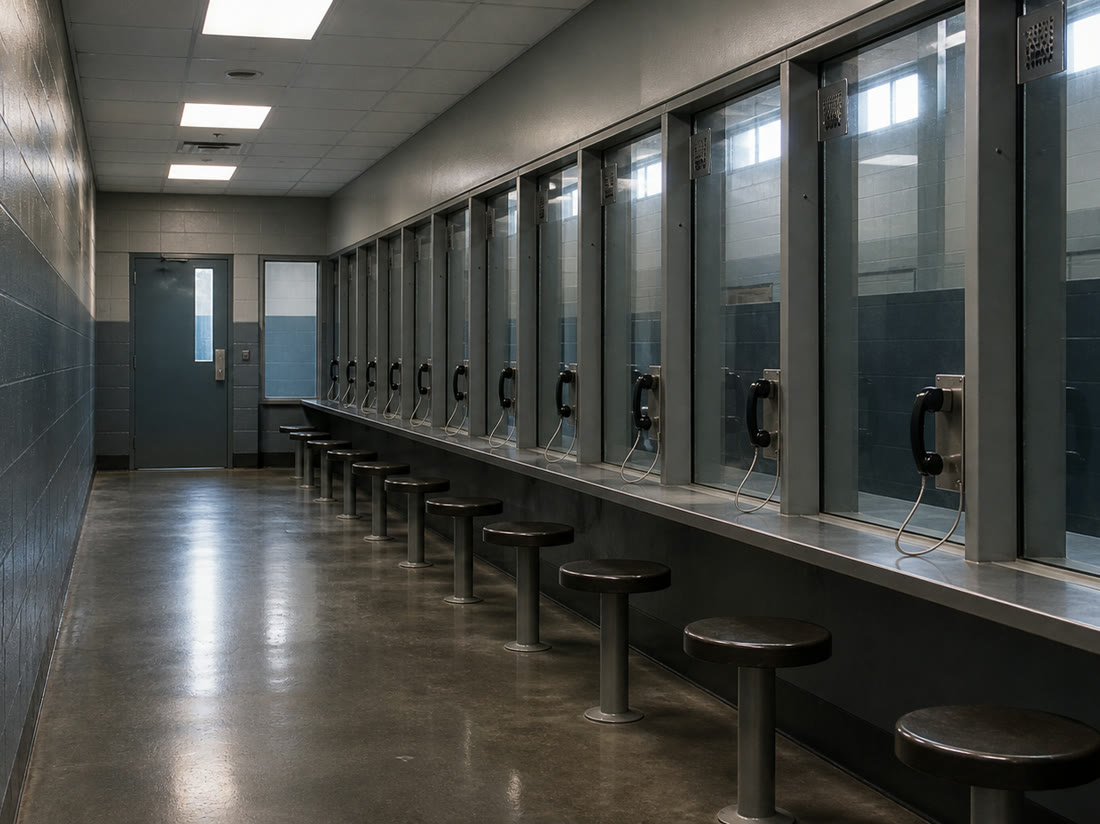
California CDCR operations
This guide explains how families navigate California Department of Corrections and Rehabilitation adult institutions: visiting, mail, packages, phones and tablets, trust deposits, and grievance pathways.
Confirm live CDCR controls before you travel or pay. Visiting status, Form 106 processing, tablet vendors, and deposit rails can change by institution and by day. Use Jail411 for orientation; use CDCR for live status, forms, and payments. Package vendor tables later on this page are hosted here so you do not have to leave Jail411 to find an approved seller.
Have this ready
Have these four facts before you act.
- 01Legal name
Full committed name used in custody records
- 02CDCR number
When you have it
- 03Institution name
Current facility, not only the city
- 04ID and return address
Government ID for visiting; deliverable return address for mail
The short answer
Statewide rules, institution-specific doors.
CDCR rules are statewide, but addresses, visiting desks, and tablet vendors are institution-specific. Get visitor approval first, check today's visiting status, use CDCR's scheduling process, send mail to the inmate mailing address on the institution page, deposit funds only through CDCR-described methods, and expect restitution deductions on many trust deposits. Start facility discovery on Jail411's California directory, then open the institution's official CDCR page.
Visiting
Visiting CDCR institutions
CDCR frames visiting in four steps: get approved, check status, schedule, then prepare. Use CDCR's Visitation Information hub for current instructions and tools. Rules below are system-level; yards and institutions still enforce local dress, property, and session limits.
Get approved (CDCR Form 106)
Adult visitors must be approved before a regular visit. CDCR's process:
- The incarcerated person obtains the Visitor Questionnaire (CDCR Form 106) and signs it.
- You complete every field, including arrests and convictions (even without charges). CDCR background-checks the form; omissions can cause denial.
- Mail the form to Visiting at the institution using the staff or visiting mailing address on the institution page — not the incarcerated person's mail address.
- Processing time varies by institution.
- If approved, CDCR notifies the incarcerated person, who notifies you. You do not need to bring a separate approval letter.
- If denied, CDCR sends a written reason. You may correct and resubmit, appeal in writing to the Warden (CDCR states a response within 15 working days), then to the Director, Division of Adult Institutions, P.O. Box 942883, Sacramento, CA 94283-0001, Attn: Director, Room 351-N (CDCR states 20 working days). The incarcerated person may also appeal through the institutional process.
Emergency or hardship visits
Emergency or hardship visits before approval are discretionary (often discussed when travel exceeds about 250 miles). CDCR advises not to rely on them — complete Form 106 before you travel when you can.
Check visiting status the same day
Institutions post Open, Open with Exceptions, or Closed (with a last-updated time) on CDCR's Facility Visiting Status board. Always refresh that board before you drive. Do not travel on a Closed posting.
Schedule the visit (VSA or email)
CDCR's visiting FAQ states that adult institutions offer in-person visiting Friday, Saturday, and Sunday, with appointments through the Visitation Scheduling Application (VSA). CDCR describes regional request windows — Northern from 6:00 a.m., Central from 6:30 a.m., Southern from 7:00 a.m., through 11:59 p.m. — opening eight days before the visit date and closing five days before. Start from CDCR's Visitation Information page for VSA access and instructions. If the Facility Visiting Status board says the institution requires email scheduling, follow CDCR's email scheduling instructions: requests between Saturday 8:00 a.m. and Monday 8:00 a.m. the week before; one visit per email; assigned times may be fixed during modified programming. Conservation and fire camps may still use hybrid video and phone or email scheduling — follow the camp instructions CDCR publishes for those sites.
Length, contact, and arrival
- Plan to arrive at least one hour before the scheduled time.
- Visits are offered for at least about two hours, subject to institution needs.
- A brief embrace and kiss at the beginning and end, holding hands, and holding accompanying children are described as allowed contact.
- Incarcerated people are limited to one in-person or video visit per day; visitors may book more than one appointment when slots exist.
- CDCR's FAQ also discusses walk-ins at many institutions when a facility is in an open status — still verify on the status board and institution notices before you rely on a walk-in.
- Dress code, property allowed in the visiting room, and yard-specific limits are enforced locally. Use the institution page and CDCR visiting help resources before you travel.
Family (overnight) visits
CDCR describes family visits as extended private visits of about 46 consecutive hours in apartment-style units on prison grounds. Only eligible incarcerated people and immediate family (including registered domestic partners and verified foster relationships) who are already approved visitors may participate. Exclusions described by CDCR include Death Row, certain sex-offense convictions, Reception Center status, and disciplinary restrictions. The incarcerated person requests a family visit through the institution's Family Visiting Coordinator; families pay for meals. Availability is limited — ask early.
Health screening notes
CDCR's visiting FAQ states that proof of COVID-19 vaccination or testing is no longer required for visiting (as of the Feb. 1, 2023 change described there). Visitors should still self-screen for symptoms. Masking and outbreak-phase rules can change with health conditions — follow the current CDCR visiting notices for the institution.
Jail411 orientation
For nationwide visiting patterns after you confirm the CDCR process, see Jail411's How to Visit Someone in Jail guide. Start facility discovery on the California directory, then open the institution's official CDCR page for Visiting phones and addresses.
Mail to someone in a CDCR prison
CDCR allows members of the public to write to incarcerated people by postal mail. Incoming letters are opened and inspected for contraband. Mail rules differ from package rules — letters go to the inmate mail line; quarterly packages do not.
Addressing
CDCR asks that envelopes include:
- Incarcerated person's full name and CDC/CDCR number
- Institution name
- P.O. Box or housing line (preferred)
- City, CA ZIP
Use the inmate mail line — not the street address
The incarcerated person's mailing address usually differs from the institution's general street address and from the Visiting or staff mailing address used for Form 106. Use Jail411's California directory to identify the facility, then copy the inmate mailing address published on that institution's official CDCR page. Misaddressed mail is a common reason letters bounce or delay.
What often goes through (general)
CDCR's Office of the Ombudsman arrival page lists common first-class items such as photographs (not Polaroid), calendars, postage-embossed envelopes (maximum forty), blank envelopes, white or yellow lined writing paper, typing paper, legal paper, children's drawings, and up to forty postage stamps. Institution and Title 15 rules still control — when in doubt, ask the institution's mailroom or read the facility page before you send something unusual.
Books and publications
Softcover books generally must come from a publisher, bookstore, or distributor that does mail-order business. The same Ombudsman page notes Amazon as a departmentally approved book vendor. CDCR describes a typical possession limit of about 10 books, with exchanges when new books arrive. Do not mail books yourself as a personal or quarterly package. For package ordering, use the hosted vendor tables later on this page.
Jail411 orientation
For general addressing patterns across systems, see Jail411's How to Write Someone in Jail guide after you confirm the CDCR inmate mail line for this institution.
Phones and tablets
Phones, tablets, and electronic messages
Most incarcerated people can place outbound calls. You generally cannot dial a housing unit directly. Audio calls, video visits, and e-messages may use different vendors depending on the institution's tablet transition status.
Audio calls
The incarcerated person initiates the call. CDCR states that audio calls from California state prisons have been free to the incarcerated person and to families since January 1, 2023. CDCR states calls are limited to 15 minutes. You may mail a phone number so they can add it; you generally cannot call into the housing unit. Free audio does not automatically mean free video visits or e-messages.
Tablets and the ViaPath-to-Securus transition
CDCR is transitioning institutions from ViaPath to Securus under a new telecommunications contract. Until an institution transitions, families keep using ViaPath; after transition, they use Securus. Content purchased or stored on ViaPath tablets does not move to Securus. CDCR posts facility-by-facility phone and tablet transition dates on its tablets page (schedule heading retrieved as of August 21, 2026). Fire camps were listed as complete; many institutions showed 2026 transition dates; others remained TBD. Always check that page for the current institution before you create an account or buy media.
Video visits and e-message pricing
Pricing for video visits and e-messages depends on which vendor serves that institution. CDCR's tablets page publishes a side-by-side cost chart (for example, e-messages listed at $0.05 on ViaPath and $0.03 on Securus on the chart retrieved 2026-09-19). CDCR's older how-to-contact page may still summarize older ViaPath prices — treat the tablets page as the live vendor and price board during the cutover. If a call or tablet service fails after a transfer or transition date, re-check which vendor the institution uses now.
Jail411 orientation
For nationwide calling patterns after you confirm the CDCR vendor for this institution, see Jail411's How to Call Someone in Jail guide.
Money and trust
Money and trust accounts
Deposit only through methods CDCR describes on its sending-money page. Confirm the CDCR number and current location through official CDCR tools (including CIRIS) before you pay. Use Jail411's California directory for facility orientation, then confirm identifiers on CDCR's own pages.
Electronic transfer (fee)
CDCR lists electronic vendors such as GTL/ConnectNetwork, JPay, or Access Corrections. CDCR states funds typically post in 1–3 days. You can often designate trust funds or restitution-only. Expect fees. Do not fund a random search-ad vendor that is not named on CDCR's sending-money page.
Lock box (no fee)
Use JPay's money-order deposit form: payable to JPay, mailed to the JPay lockbox address CDCR publishes. Put no letters in the envelope. Personal checks are held 10 business days. Maximum $999.99 per form. Lock-box deposits are for incarcerated-person funds only — not family-visit funds.
Mail a check or money order to the institution (no fee)
Payable to the California Department of Corrections and Rehabilitation, with the sender address and the incarcerated person's name and CDCR number. CDCR states a 30-day hold. This path is slower than electronic transfer; keep a copy of the instrument and tracking if you use mail.
Restitution
If the incarcerated person owes a restitution fine, CDCR states it deducts 50% (or the balance owed, if less) from wages and trust deposits, plus an administrative fee of 10% of that deduction, for a maximum 55% deduction, citing CCR §3097. That is why a $100 deposit may post as far less spendable balance. Package purchases made directly from approved vendors are described as not hit by that restitution deduction the way trust deposits are.
Family visiting funds
CDCR states family-visiting funds must follow institution Family Visiting Office instructions and may not be sent by electronic transfer. Ask the Family Visiting Coordinator which payment method that institution accepts before you send money meant for an overnight family visit.
Jail411 orientation
For general deposit patterns across systems, see Jail411's How to Put Money on Someone's Books guide after you confirm the CDCR method for this transfer.
Grievances and Ombudsman
Grievances, appeals, and the Ombudsman
Use the right pathway: the incarcerated person files administrative remedies; families can contact the Ombudsman for navigation help. The Ombudsman does not replace appeals or override wardens.
Administrative remedies (incarcerated person files)
CDCR's administrative remedies process is the formal way an incarcerated or supervised person challenges many departmental decisions or conditions. CDCR's Office of Appeals describes a two-level review structure. Adopted Title 15 revisions (NCR 25-06 certificate of compliance materials) state that the article applies to grievances, reasonable-accommodation requests, and appeals received on or after January 22, 2026, and reference:
- CDCR Form 602-1/1824 (01/25) — Grievance / reasonable accommodation request to the Office of Grievances
- CDCR Form 602-2 (01/25) — Appeal to the Office of Appeals
- CDCR Form 602-3 (01/25) — Request to implement an overdue remedy
Core timelines (adopted text)
Core timelines in that adopted text include about 60 calendar days to submit a grievance after discovery, about 60 calendar days for an Office of Grievances decision letter, about 60 calendar days to appeal, and about 60 calendar days for an Office of Appeals decision. Staff-misconduct allegations follow additional screening rules in the same article. Keep dated copies of everything the incarcerated person files.
What families can and cannot do
Families usually cannot file the 602 for the incarcerated person. Help by keeping copies, timelines, and clear facts, and by asking the incarcerated person to use the institutional process. CDCR's Office of Appeals states it does not release appeal details by phone to unverified callers. Mail listed on that office's CDCR page: P.O. Box 942883, Sacramento, CA 95811.
Office of the Ombudsman (family-accessible)
CDCR's Office of the Ombudsman can listen, explain policy, and suggest options. It does not replace the grievance or appeal process, does not run formal investigations, and does not override wardens or courts.
- Phone: (916) 445-1773
- Mail: Office of the Ombudsman, P.O. Box 942883, Sacramento, CA 94283
- Live request form (CDCR-hosted only): one form or call per issue on CDCR's Ombudsman assistance-request page
Packages
Packages and religious property
You cannot mail a quarterly package yourself. CDCR does not allow families to mail quarterly or personal-property packages directly to someone in a California state prison. Order through a CDCR-approved vendor listed below. Package purchases from those vendors are not hit by restitution the way trust deposits are.
Before you order, have:
- Name: Committed name on file
- CDCR number: Needed on the order
- Institution: Current facility (and housing if you know it)
- Privilege group: If you know it — can affect package limits
General package vendors
CDCR General Vendors List (2025). Ordinary quarterly and personal-property packages.
| Vendor | Phone | Website | Address |
|---|---|---|---|
| Access Securepak General quarterly / personal-property packages | (800) 546-6283 | californiaqp.com · accesscatalog.com | P.O. Box 50028, Sparks, NV 89435-0028 |
| Mike's Better Shoes General quarterly / personal-property packages | (856) 767-1300 | mikesbettershoes.com | 1256 Haddonfield-Berlin Rd, Voorhees, NJ 08043 |
| The Vitamin Outlet / Fitness Systems Mfg. Corp. General quarterly / personal-property packages | (800) 967-1827 (main) · (800) 822-9995 (alternate) | P.O. Box 2073, Sinking Spring, PA 19608 | |
| Union Supply Direct General quarterly / personal-property packages | (866) 404-8989 · (562) 361-5711 | CaliforniaInmatePackage.com | P.O. Box 619059, Dallas, TX 75261-9059 |
| Walkenhorst's General quarterly / personal-property packages | (800) 660-9255 | walkenhorsts.com | 445 Ingenuity Ave, Sparks, NV 89441 [email protected] |
| Emma's Premium Services General quarterly / personal-property packages | (888) 638-9994 | emmaspremiumcalifornia.com | 1460 Livingston Avenue, Building 900, Dock 905, North Brunswick, NJ 08902 [email protected] |
Religious package vendors
CDCR Religious Vendors List (2026). For religious personal property. Scriptures may also come from ordinary publishers — they do not have to be on this list.
| Vendor | Phone | Website | Address |
|---|---|---|---|
| Access SecurePak Any RPPM item | (800) 546-6283 | californiaqp.com · accesscatalog.com | P.O. Box 50028, Sparks, NV 89435-0028 |
| Dancing Bear Indian Trader Any RPPM item · Native American spiritual items | (760) 747-2323 | shop.dancingbearindiantrader.com/cdcr | 1313 Simpson Way, Ste. A, Escondido, CA 92029 |
| Earthly Love Imports Any RPPM item | (760) 544-3310 | earthlyloveimports.com | 1820 W. Florence Ave., Ste. 318, Los Angeles, CA 90047 [email protected] |
| Garden of Fragrance (SD) Any RPPM item | (619) 527-1307 | gofsd.com | 4698 Alvarado Canyon Rd., Ste. P, San Diego, CA 92120 [email protected] |
| Indira Imports Inc. Any RPPM item | (213) 749-4449 | indirainmate.com | 227 E. 11th Street, Los Angeles, CA 90015 |
| Islamic Bookstore Any RPPM item | (888) 786-8700 | islamicbookstore.com/cdcr.html | 4639 Benson Avenue, Baltimore, MD 21227-1410 |
| Jewelry and Gift Depot Any RPPM item | (904) 300-2428 | jewelryandgiftdepot.com | 1100 Kings Road, Box 40002, Jacksonville, FL 32203 [email protected] |
| Jewish Supply (Aleph Institute) Any RPPM item · Jewish religious items | (305) 866-5875 | jewishsupply.com | 260 95th Street, Suite 212, Surfside, FL 33154 |
| Modern Products USA, Inc. Any RPPM item · previously DA Prime Products, USA | (916) 599-9710 or (302) 668-6675 | modernproductsreligiousitems.com | P.O. Box 6588, Wilmington, DE 19804 [email protected] |
| Righteous Kingdom Any RPPM item | (800) 920-7642 | righteouskingdombooksandthings.com | 8726 S Sepulveda Blvd, Suite D-335, Los Angeles, CA 90045 [email protected] |
| Universal World Jewelry Any RPPM item | (832) 422-6553 | universalworldjewelry.com | 17119 Red Oak Drive #90942, Houston, TX 77290 [email protected] |
| Walkenhorst's Any RPPM item | (775) 393-4000 | walkenhorsts.com | 445 Ingenuity Avenue, Sparks, NV 89441 [email protected] |
Religious personal property (plain language)
The RPPM is the list of personal religious items someone may keep in Level I–IV prisons, camps, and community facilities. Group worship items are decided at the institution.
- Unless an item says otherwise, colors must be white, gray, or multicolored with white/gray as the main color.
- Clothing cannot have hoods, zippers, inside pockets, or gang-linked designs. Some items cannot leave institution grounds.
- How many of an item someone may keep depends on privilege group and housing — ASU/PSU/SHU can be stricter.
- Order religious items from the religious vendors above when they must match matrix specs. CDCR will not fix vendor product disputes.
Main categories on the matrix
- Altar and worship
- Altar cloth; bowl, chalice, or handwashing cup; clay prostration tablet; prayer rug or mat
- Beads and beading
- Beading supplies; beaded head, wrist, or choker bands; prayer beads such as mala, dhikr, or rosary
- Clothing and headgear
- Scarves, hijab, yarmulke, kufi, and other headgear; prayer shawl; rakusu; tallit-katan / tsitsit
- Cards and recordings
- Prayer or holy cards and deity photos; religious CDs from approved religious catalogs
- Ceremonial items
- Dream catcher or medicine wheel; feathers; herbs; powders; prayer oils; salt; shells; spiritual bag; stones; tarot or rune cards; tefillin; tiles; wand
- Jewelry and carry items
- Religious medallion and chain as a set; clear carry bags; miswak; cloth scapular
Source: CDCR approved package-vendor lists (General 2025; Religious 2026) and Religious Personal Property Matrix (Revised 1/1/23), retrieved 2026-09-19. Snapshot hosted on Jail411 for families; rules and vendor approval can change.